“Do not lay hands upon anyone too hastily and thereby share responsibility for the sins of others; keep yourself free from sin.” — 1 Timothy 5:22 (NASB)
A Crisis the Church Can No Longer Ignore
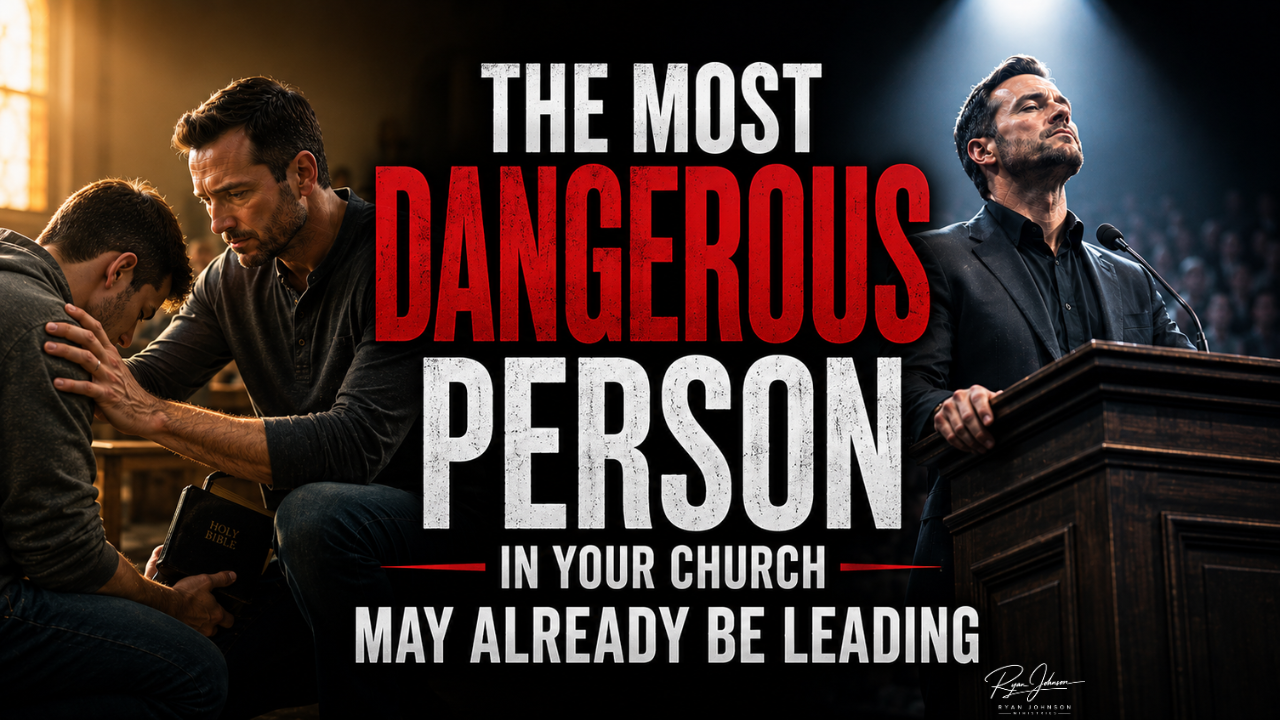
Every church eventually faces one of its most important decisions: Who can be trusted to help lead God’s people?
The answer to that question shapes the spiritual health of a congregation for years, even generations. Yet too often, churches evaluate leaders by what they accomplish rather than by who they are in Christ.
- Confidence is mistaken for conviction.
- Charisma is mistaken for anointing.
- Competence is mistaken for character.
As a result, sincere, Bible-believing churches sometimes elevate the very people Scripture warns them to examine most carefully.
This article is not about diagnosing psychological disorders or assigning clinical labels. The term narcissist is used in its common sense to describe a leader whose life is marked by self-exaltation, manipulation, a need for admiration, and a desire to control others. While modern psychology gives these behaviors a name, Scripture has long exposed the condition of the heart that produces them.
The tragedy is not that self-exalting people seek positions of influence. That has always existed. The greater tragedy is that the Church sometimes entrusts them with spiritual authority. How does this happen?
Not because pastors, elders, or church boards intentionally choose unhealthy leaders. More often, they are trying to solve legitimate ministry needs. They need dependable people. They need capable leaders. They need someone willing to shoulder responsibility and help carry the weight of ministry.
In those moments, effectiveness can quietly become more persuasive than discernment. The conversation shifts from, Can this person be trusted? to, Can this person get the job done?
Those are not the same question. Before God entrusts anyone with His people, He looks beyond talent, confidence, and leadership ability. He examines the heart. So should we.
God’s Standard for Leadership
Before we can understand why self-exalting leaders are sometimes entrusted with spiritual authority, we must first understand what God looks for in a leader. The world is impressed by talent, influence, and visible success. God is not.
When the prophet Samuel stood before Jesse’s sons, Eliab appeared to possess every outward quality of a king. Yet God corrected Samuel’s perspective: “Do not look at his appearance or at the height of his stature…for man looks at the outward appearance, but the LORD looks at the heart.” — 1 Samuel 16:7 (NASB)
That principle has never changed. Throughout Scripture, God consistently places character before competence. The qualifications for spiritual leadership emphasize humility, integrity, self-control, faithfulness, and a life worthy of imitation, not charisma, personality, or natural ability.
Why? Because gifts may attract people, but only character can faithfully shepherd them. Leadership does not create character…it reveals it.
Authority simply magnifies what is already present in the heart. Humility becomes more evident. Pride becomes more dangerous. Jesus said, “For the mouth speaks out of that which fills the heart.” — Matthew 12:34 (NASB)
Eventually, every heart is revealed. No amount of giftedness can permanently conceal pride, selfish ambition, or an unwillingness to receive correction. Most churches already know these biblical truths.
Yet they still promote the wrong people. Not because they reject Scripture. But because the pressures of ministry can make immediate effectiveness seem more urgent than patient discernment. Understanding those pressures may be one of the most important steps toward preventing unhealthy leadership in the Church.
Why Good Churches Promote the Wrong Leaders
One of the greatest misconceptions about unhealthy leadership is that it exists because churches have little to no wisdom or because they ignore Scripture. That is rarely the case.
Most pastors, elders, and church leaders sincerely desire to honor Christ. They love God’s people and want to appoint leaders who will strengthen the church. Yet any church can make painful leadership mistakes. Why? Because the truth is that ministry is often led under pressure.
Imagine a faithful pastor who has spent years watching the congregation slowly decline. Attendance has decreased. Faithful volunteers have grown older, become weary, or stepped away from serving. Ministries that once flourished now struggle simply to survive. Every week brings another leadership vacancy, another ministry in need of help, and another reminder that there are more responsibilities than willing hands. And then someone arrives who seems to answer every need.
- They volunteer without being asked.
- They solve problems.
- They organize ministries.
- They recruit volunteers.
- They communicate with confidence.
- Within months, they accomplish more than others have in years.
For an exhausted pastor and leadership team, their arrival feels like an answer to prayer. Finally, someone can carry the load. And that is precisely where discernment becomes most vulnerable.
Now, imagine a faithful pastor whose church suddenly experiences an unexpected season of growth. Attendance increases rapidly. New believers are coming to Christ. Families are joining the congregation. Ministries are expanding faster than the existing leadership can support them. Every week brings an urgent need for teachers, small group leaders, ministry directors, and volunteers. The opportunities are exciting, but the pressure to identify and appoint capable leaders becomes greater than ever before.
The greatest danger is not whether a church is growing or struggling. It is allowing the pressures of ministry to outpace biblical discernment. When that happens, the relief of finding someone capable can quietly overshadow the responsibility of proving that person’s character. Without realizing it, the conversation begins to shift.
- Instead of asking, “Has this person’s character been tested?”
- The question becomes, “How quickly can we give them more responsibility?”
- Instead of asking, “Have they demonstrated humility?”
- Leaders begin asking, “Where else can we use them?”
Churches rarely promote the wrong leaders because they reject Scripture. More often, they do so because the pressures of ministry make immediate effectiveness seem more urgent than patient discernment.
That is precisely why Paul warned Timothy, “Do not lay hands upon anyone too hastily and thereby share responsibility for the sins of others; keep yourself free from sin.” — 1 Timothy 5:22 (NASB)
Leadership appointments are never merely organizational decisions. They are spiritual decisions.
Self-exalting people often possess qualities that naturally attract attention. They are decisive, confident, persuasive, and willing to assume responsibility when others hesitate. From the outside, they often appear to be exactly what a struggling church needs.
- Yet confidence is not humility.
- Influence is not spiritual maturity.
- Competence is not Christlike character.
The New Testament never teaches that the most gifted person should lead. It teaches that the most qualified person should lead, and those qualifications begin with character.
When churches lose sight of that truth, they often reward the very traits Scripture tells us to examine most carefully. The person who initially appeared to solve the church’s greatest problems eventually becomes the source of its deepest wounds. Today’s answer becomes tomorrow’s crisis.
Scripture gives us a vivid example of exactly what that kind of leadership looks like. His name was Diotrephes.
Diotrephes: When Self Becomes the Mission
Few individuals in Scripture illustrate self-exalting leadership more clearly than Diotrephes. John introduces him with one revealing statement: “I wrote something to the church; but Diotrephes, who loves to be first among them, does not accept what we say.” — 3 John 9 (NASB)
John doesn’t begin with Diotrephes’ behavior. He begins with his heart. “He loves to be first.” Everything else flowed from that one desire.
Diotrephes rejected apostolic authority, slandered faithful believers, refused to welcome those sent by John, and even expelled from the church those who did (3 John 9–10). His problem was not merely controlling people. His problem was loving prominence.
When a leader’s greatest ambition becomes protecting his position instead of serving Christ’s people, leadership slowly revolves around self instead of the Savior. That transformation rarely happens overnight.
- Questions become threats.
- Correction becomes an attack.
- Disagreement is viewed as disloyalty.
- Before long, protecting influence becomes more important than protecting the flock.
Jesus warned against this very kind of leadership: “You know that those who are recognized as rulers of the Gentiles lord it over them…But it is not this way among you, but whoever wishes to become great among you shall be your servant.” — Mark 10:42–43 (NASB)
The world’s leaders seek prominence. Christ’s leaders pursue service. That distinction matters because self-exalting leaders often appear successful. Ministries may grow or shrink. Budgets may increase or decrease. Programs may expand or decrease. But visible success is never the measure of spiritual health. The true measure of a shepherd is not what they build. It is how they care for the people Christ purchased with His own blood.
Diotrephes remains a warning to every generation of the Church. The greatest danger is not that a leader possesses influence. It is that they begin to love it. When prominence becomes the goal, Christ is no longer the focus, and the flock inevitably suffers.
The challenge before the Church, therefore, is not simply recognizing unhealthy leadership after the damage has been done. It is recognizing the heart that produces it before entrusting someone with spiritual authority.
Recognizing the Warning Signs
Jesus said we would recognize people by their fruit (Matthew 7:16), not merely by their gifts. The issue is not perfection but consistent patterns of character. Before entrusting someone with spiritual authority, ask these questions.
1. Are They Teachable?
One of the clearest marks of spiritual maturity is humility. Godly leaders welcome correction because they desire to grow. Self-exalting leaders become defensive, shift blame, or resist accountability. Any individual who cannot be corrected should not be given greater authority.
2. Who Are They at Home?
The truest measure of a leader is often found where no audience exists. How do they treat their spouse? How do they speak to their children? Does their family experience the same humility, patience, and Christlike character that others see from the platform?
Paul begins the qualifications for overseers at home because private character always precedes public ministry (1 Timothy 3:4–5). If a leader demands honor in public but rules the home through intimidation, manipulation, anger, or neglect, that contradiction should never be ignored.
3. Do They Build Others or Build Themselves?
Healthy leaders equip and develop others. They celebrate the success of those they lead and rejoice when others flourish. Self-exalting leaders often view gifted people as competition and gradually become the center around which everything revolves.
4. Do They Lead Through Trust or Through Fear?
Christlike leadership creates security because it is rooted in humility and truth. Self-exalting leadership creates anxiety. People become reluctant to ask questions, express concerns, or offer biblical counsel because they fear losing favor or being labeled disloyal. Where fear governs relationships, shepherding has already begun to disappear.
5. Are They Quick to Repent and Follow Through With Any Restoration Requirements?
Every leader will fail. The defining question is how they respond. Healthy leaders confess, repent, submit to accountability, and willingly complete whatever biblical restoration is necessary. Self-exalting leaders protect their reputation before their integrity. Nothing reveals character more clearly than a leader’s response to correction.
6. Who Ultimately Receives the Glory?
Faithful leaders consistently point people toward Christ. Self-exalting leaders may speak often about Christ, yet gradually draw people’s affection, loyalty, and dependence toward themselves. John the Baptist gave every spiritual leader the proper perspective: “He must increase, but I must decrease.” — John 3:30 (NASB). One desires to make Christ known. The other cultivates dependence upon themselves, causing people to believe they cannot grow apart from their leadership.
These questions are not intended to create suspicion but biblical discernment. Every pastor, elder, church board, and ministry leader should ask them before entrusting someone with spiritual authority, and every leader should ask them of themselves.
Recognizing unhealthy leadership before authority is entrusted is far easier than repairing the damage after it has been abused. The Church will never protect itself merely by improving its leadership process. It will protect itself by faithfully following the leadership model of Jesus Christ.
The Church’s Responsibility
Every church will eventually entrust someone with spiritual influence. The question is not whether leaders will be appointed. The question is whether they will be recognized according to God’s standards or man’s.
Too often, churches feel pressured to fill positions quickly. Ministries need help. Volunteers are few. Responsibilities continue to grow. In those moments, the temptation is to choose the person who appears most capable rather than the one whose character has been faithfully proven.
Scripture calls us to a different path. Paul wrote, “Do not lay hands upon anyone too hastily and thereby share responsibility for the sins of others; keep yourself free from sin.” — 1 Timothy 5:22 (NASB)
This is more than instruction about ordination. It is a call to holy discernment. Leadership is not a position to be filled. It is a sacred trust to be stewarded.
Every pastor, elder, church board, and ministry leader bears the responsibility of protecting Christ’s flock by prayerfully recognizing those whose lives consistently reflect the character of Christ. This is not a search for perfection. It is a search for proven faithfulness.
For leaders who are humble enough to receive correction, mature enough to submit to accountability, and devoted enough to consistently point people to Jesus rather than themselves.
The Church belongs to Jesus Christ.
He alone is the Head of the Church.
He alone is the Chief Shepherd.
Every spiritual leader will one day give an account for how they cared for the people He purchased with His own blood. That reality should produce both humility and holy fear.
If the Church is to remain healthy in the years ahead, we must recover the courage to value character above charisma, discernment above urgency, and faithfulness above visible success. Healthy churches are not built by dynamic personalities. They are built by faithful shepherds. Men and women whose greatest ambition is not to be first, but to faithfully serve the One who is.
For His glory.
For the protection of His people.
And for the honor of the Chief Shepherd.